The Importance of Lighting for Home Safety
Good lighting is essential for performing daily activities safely and efficiently. Inadequate lighting can lead to accidents, such as trips and falls, which are a leading cause of injury among seniors. According to the Canadian Institute for Health Information (CIHI), falls account for 85% of injury-related hospitalizations among seniors in Canada. Proper lighting can help mitigate these risks by ensuring that pathways are clearly visible and potential hazards are easily identified.In addition to preventing accidents, lighting also plays a critical role in enhancing home security. Well-lit exteriors deter potential intruders by eliminating dark areas where they might hide. Moreover, indoor lighting can provide peace of mind by creating a lived-in appearance, even when the home is unoccupied.Key Areas to Focus on for Lighting Safety
Entrances and Exits
Proper lighting at all entrances and exits is essential for safety and security. These areas are often high-traffic zones where the risk of tripping or stumbling is significant, especially when carrying groceries or other items. Motion-sensor lights or dusk-to-dawn fixtures are practical options, as they automatically illuminate these areas when needed, enhancing visibility and reducing the risk of accidents.Stairways and Hallways
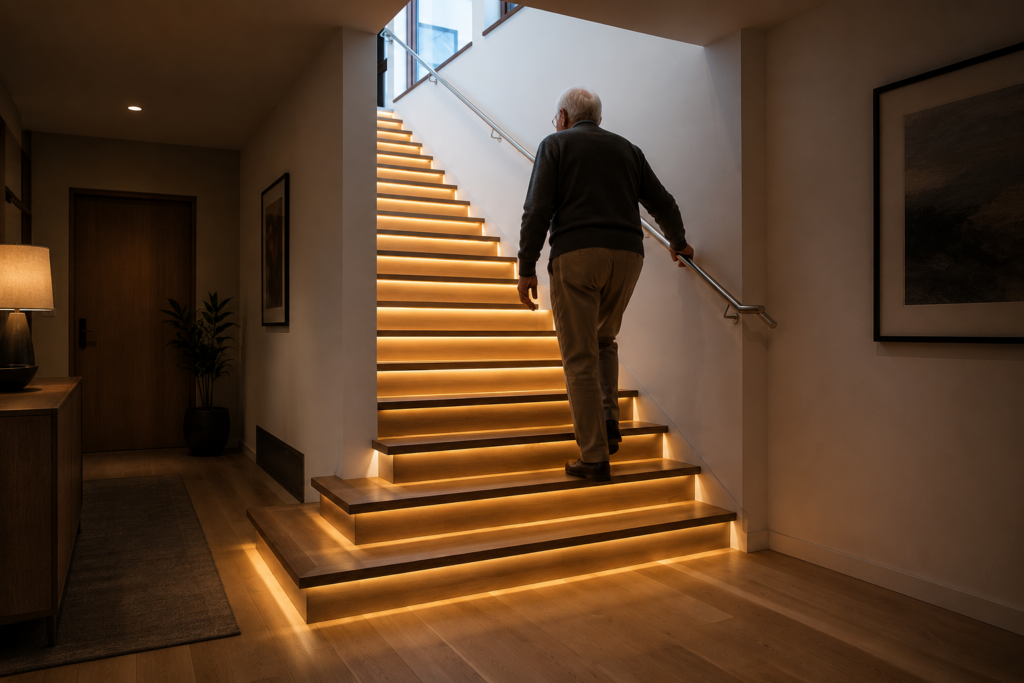
Stairways and hallways are common areas where accidents occur due to inadequate lighting. Installing sufficient overhead lighting or wall-mounted fixtures along these pathways ensures that each step and corner is visible. It is also advisable to use bright, energy-efficient bulbs that provide consistent illumination without flickering. For added safety, consider installing light switches at both the top and bottom of stairways.Kitchens and Bathrooms
Kitchens and bathrooms are spaces where proper lighting is crucial, given the presence of sharp objects, hot surfaces, and slippery floors. Under-cabinet lighting in the kitchen can illuminate countertops, making food preparation safer. In bathrooms, bright, moisture-resistant lighting is essential around mirrors and above showers or bathtubs to prevent slips and falls.Living Rooms and Bedrooms
These rooms are typically used for relaxation and entertainment, but they still require adequate lighting for safety. In living rooms, consider using floor lamps or table lamps with adjustable brightness to provide sufficient light for reading or other activities. Bedrooms should have bedside lamps or nightlights that provide enough illumination for safe movement during nighttime trips to the bathroom.Outdoor Areas
Outdoor lighting enhances both safety and security. Pathways, driveways, and patios should be well-lit to prevent accidents and deter unwanted visitors. Solar-powered garden lights, wall-mounted lanterns, and floodlights are all effective options. For additional security, consider installing motion-activated lights that illuminate when movement is detected.Types of Lighting Solutions
Ambient Lighting
Ambient lighting provides overall illumination for a room and is typically the primary source of light. It can be achieved through ceiling-mounted fixtures, chandeliers, or recessed lighting. The goal of ambient lighting is to provide a comfortable level of brightness that allows for general visibility and movement.Task Lighting
Task lighting is focused illumination that illuminates specific areas where activities such as reading, cooking, or grooming occur. Desk lamps, under-cabinet lights, and vanity lights are common examples of task lighting. This type of lighting is essential for reducing eye strain and enabling detailed tasks to be performed safely.Accent Lighting
Accent lighting highlights specific features or areas within a space, such as artwork, architectural details, or outdoor landscaping. While primarily decorative, accent lighting can also contribute to safety by illuminating areas that might otherwise be in shadow.Emergency Lighting
During power outages, emergency lighting provides temporary illumination to help occupants navigate safely. Battery-powered lanterns, flashlights, and emergency exit signs are all forms of emergency lighting. It’s important to ensure that these devices are readily accessible and regularly checked for functionality.Practical Tips for Optimizing Home Lighting
- Choose the Right Bulbs: Select energy-efficient LED bulbs that provide bright, consistent light. LEDs are long-lasting and available in a range of colour temperatures, allowing you to choose the best option for each area of your home.
- Use Dimmers: Installing dimmer switches lets you adjust light brightness to your needs, saving energy and providing flexibility.
- Consider Smart Lighting: Smart lighting systems can be controlled remotely via smartphone apps, allowing you to adjust lighting levels, set schedules, and create automation routines. This technology can enhance convenience and security, especially for seniors with mobility challenges.
- Install Nightlights: Place them in key areas such as hallways, bathrooms, and bedrooms to provide low-level illumination at night. Motion-activated nightlights are a practical option, as they only turn on when movement is detected.
- Regular Maintenance: Check and replace burned-out bulbs regularly to ensure that all areas of your home are adequately lit. Clean light fixtures and lampshades to maximize brightness and improve light quality.
- Test and Update Security Lighting: Regularly test outdoor security lights and replace any malfunctioning fixtures. Consider upgrading to more advanced options, such as motion-sensor lights or smart security systems, for enhanced protection.
Why Homeowners Trust Adaptive Living?
Adaptive Living bridges healthcare insights with expert design to deliver beautiful, functional, and safe homes. We specialize in adaptive living solutions that help seniors live independently while reducing the risk of home accidents. From home modifications for people with disabilities to fall-prevention lighting, our team ensures each modification is made with care and precision. Our approach not only meets medical standards but also transforms living spaces into environments that foster independence, comfort, and dignity.With a commitment to personalized service, we make every home modification decision with the end-user’s needs in mind. Trust us to bring your vision for an accessible home to life, ensuring it’s both safe and stylish.Conclusion:
Proper lighting is one of the simplest yet most effective ways to improve home safety for seniors and individuals with mobility challenges. From brighter stairways and motion-sensor hallway lights to well-lit bathrooms, kitchens, and outdoor areas, the right lighting choices can help in fall prevention, improve visibility, and support greater independence at home.For families planning a home renovation for disabled loved ones, lighting should be treated as an essential part of the overall safety plan. Small upgrades can make everyday movement easier, safer, and more comfortable.At Adaptive Living, we design thoughtful home modifications that support independence, dignity, and long-term safety. Contact us today to discuss how our adaptive living solutions can help make your home safer, more accessible, and better suited to your needs.FAQ
What is the best lighting for the elderly to prevent falls at home?
The best lighting includes motion sensor lights for disabled persons’ home safety and bright LED lights to eliminate shadows and improve visibility.
How can adaptive living solutions help seniors live independently?
Adaptive living solutions for seniors with mobility issues include modifications such as grab bars and low-threshold showers to reduce fall risk and enhance independence.
What are the benefits of handicap home modifications, lighting, and accident prevention?
Handicap home modifications, lighting, and accident prevention ensure key areas are well-lit, reducing fall risks and improving safety throughout the home.
How can motion sensor lights improve home safety for individuals with disabilities?
Motion sensor lights for disabled persons’ home safety provide automatic illumination in key areas, helping individuals move safely without stumbling in the dark.
Why are adaptive living solutions important for fall prevention in senior homes?
Adaptive living solutions reduce fall risks by implementing modifications like safer lighting and accessible bathroom features, promoting safer, independent living.