As Canada’s population ages, many seniors and their families are asking an important question: Why do seniors want to stay in their own homes? For many older adults, the answer goes far beyond comfort. Home represents independence, dignity, familiar routines, treasured memories, and a sense of control over daily life.
Aging in place refers to the ability to live safely, independently, and comfortably in one’s own home and community for as long as possible. For seniors in Ottawa and across Canada, this choice can support emotional well-being, reduce stress, and help preserve meaningful connections with family, neighbours, and community supports.
This blog explores the importance of aging in place from a Canadian perspective, including the psychological, emotional, social, and practical reasons seniors often prefer to remain at home.
The Emotional and Psychological Significance of Home
Home is not just a physical space. It is a place filled with memories, personal routines, family history, and emotional security. For many seniors, leaving home can feel like losing part of their identity, especially if they have lived in the same space for many years.
The emotional benefits of aging in place are strongly connected to familiarity and continuity. Remaining in a known environment can help seniors feel more grounded, confident, and emotionally secure. A familiar kitchen, bedroom, hallway, or garden can provide comfort during a stage of life when many other changes may feel difficult to manage.
For seniors experiencing mobility challenges, cognitive changes, or health concerns, this sense of familiarity can become even more important. Being surrounded by known layouts, objects, sounds, and routines can reduce anxiety and help support day-to-day confidence.
The Role of Familiarity and Comfort
Familiarity plays a powerful role in psychological well-being. When seniors know where things are, how rooms are arranged, and how to move through their home safely, daily tasks often feel less overwhelming.
A familiar environment can also reduce feelings of disorientation. This is especially meaningful for seniors living with cognitive impairments, memory loss, dementia, or Alzheimer’s disease. Predictable surroundings may help support routine, reduce confusion, and provide a stronger sense of safety.
Small details can make a meaningful difference. A favourite chair near a window, a familiar bathroom layout, family photos in the hallway, or a well-used kitchen can all contribute to emotional comfort. These details are difficult to recreate in a new environment, which is one reason aging in place can feel so important to many older adults.
Social Connections and Community Involvement
Aging in place also helps seniors remain connected to their communities. For many older adults, neighbours, local shops, community centres, faith groups, healthcare providers, and nearby family members are part of their everyday support system.
These connections can directly impact senior independence and mental health. Social interaction helps reduce loneliness, supports emotional resilience, and fosters a sense of belonging among seniors. Even simple routines, such as speaking with a neighbour, attending a local seniors’ program, or visiting a familiar pharmacy, can help seniors feel engaged and supported.
In Ottawa, community-based programs, caregiver networks, local healthcare professionals, and home support services can all help seniors remain safely at home. When the home environment is also adapted for safety and accessibility, seniors are better positioned to stay connected to the people and places that matter most.
The Psychological Benefits of Autonomy and Control
Autonomy is one of the most important psychological needs at every stage of life. Seniors want to make choices about how they live, where they spend their time, what routines they follow, and how they receive support.
Aging in place allows many seniors to retain a stronger sense of control. They can decide when to wake up, what meals to prepare, how to arrange their personal space, and how involved they want family members or caregivers to be. These choices may seem small, but they can have a major effect on self-esteem and emotional well-being.
When families compare the psychological effects of aging in place vs assisted living, one of the biggest differences is often the level of personal control. Assisted living or long-term care may be necessary in some situations, but for seniors who can safely remain at home with the right supports, aging in place can help preserve independence and personal dignity.
Economic and Practical Considerations
For many Canadian families, cost is also part of the conversation. Assisted living and long-term care can be expensive, especially for seniors on fixed incomes. While staying at home still requires planning, care support, and possible renovations, it may be a more practical option for many households.
Government programs and tax credits may also help make aging in place more achievable. For example, accessibility-related upgrades may qualify for financial support depending on eligibility, the type of work completed, and current federal or provincial programs.
However, cost should not be the only deciding factor. The home must also be safe, functional, and suitable for the senior’s current and future needs. Without the right planning, risks such as falls, bathroom injuries, poor lighting, and unsafe stairways can make independent living more difficult.
Creating a Safer Home for Aging in Place
While the benefits of aging in place are clear, safety must come first. Many older homes were not designed for changing mobility needs. Narrow doorways, slippery floors, high bathtub edges, steep stairs, poor lighting, and hard-to-reach fixtures can create daily barriers.
This is where home accessibility renovations can make a meaningful difference. Thoughtful changes can help seniors move through their homes with more confidence while reducing avoidable risks. These renovations may include improved lighting, safer flooring, grab bars, stair lifts, wheelchair ramps, wider doorways, accessible entrances, and layout adjustments.
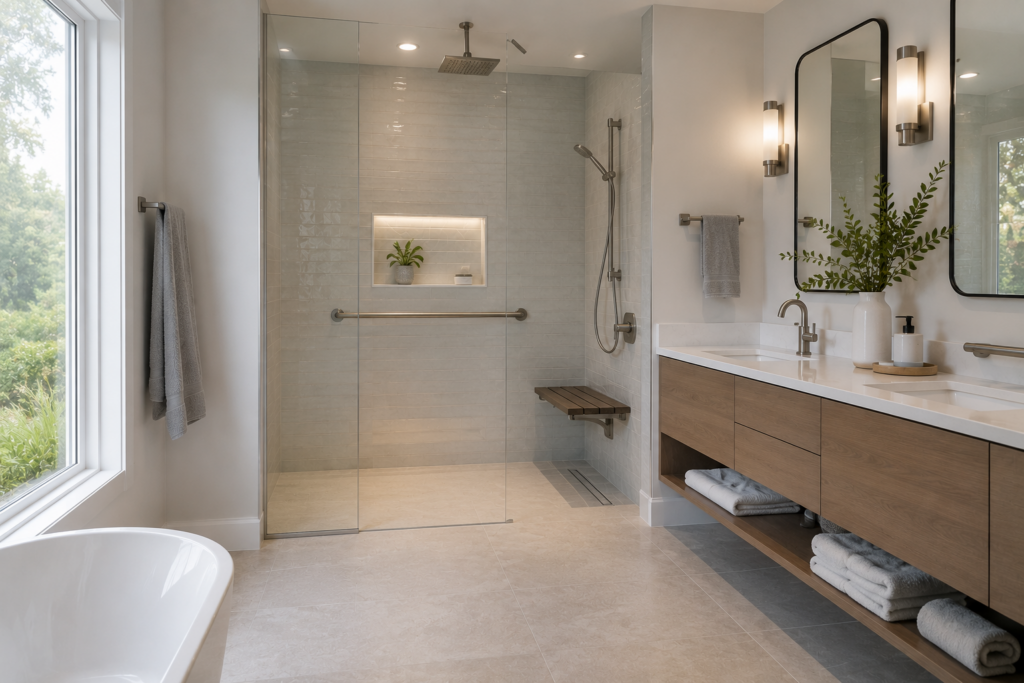
Bathrooms are often one of the highest-risk areas in the home. Slippery surfaces, high tub walls, and limited support can make bathing stressful or unsafe. Professional accessible bathroom renovations may include curbless showers, comfort-height toilets, non-slip flooring, grab bars, handheld showerheads, wider turning space, and easier-to-reach fixtures.
Well-planned home modifications for seniors should support both physical safety and emotional confidence. The goal is not to make the home feel clinical or institutional. The goal is to create a space that feels familiar, comfortable, dignified, and easier to use every day.
How Home Changes Support Mental Well-Being
Families often ask how home modifications for seniors support mental well-being. The answer is simple: when the home becomes safer and easier to navigate, seniors often feel less anxious, less dependent, and more confident in their daily routines.
For example, a senior who fears falling in the bathroom may start avoiding bathing or relying heavily on a caregiver. After installing a curbless shower, grab bars, and non-slip flooring, that same person may feel more comfortable completing personal care tasks with greater independence.
Similarly, better lighting can reduce nighttime fear. A ramp can make entering and leaving the home less stressful. A stair lift can help a senior continue using more areas of their home. These changes not only improve movement; they can also restore confidence, privacy, and peace of mind.
A Safer Home Starts With the Right Accessibility Partner
At Adaptive Living, we specialize in adaptive renovations for seniors and individuals with mobility or cognitive challenges in Ottawa. Our work is focused on helping people live safely, comfortably, and independently in homes that continue to feel like home.
Our team provides personalized home safety assessments and practical recommendations based on each person’s needs, routines, mobility level, and long-term goals. Rather than offering one-size-fits-all solutions, we consider the entire living environment, including bathrooms, bedrooms, entrances, stairways, outdoor areas, lighting, and daily movement patterns.
Clients choose Adaptive Living because we combine accessibility knowledge, renovation experience, and a deep understanding of how home environments affect confidence, independence, and quality of life.
What Sets Adaptive Living Apart
Choosing the right accessibility contractor matters. Families often make decisions during stressful moments, such as after a fall, hospital discharge, diagnosis, or noticeable decline in mobility. The right partner should offer clarity, compassion, and practical solutions.
Adaptive Living supports Ottawa families with:
Healthcare-informed planning: We consider mobility, cognitive needs, daily routines, and caregiver concerns when recommending home changes.
Personalized safety audits: We carefully assess the home to identify fall risks, accessibility barriers, and areas where modifications can enhance safety.
Accessible renovation expertise: From bathrooms and ramps to grab bars, lighting, and layout improvements, our team focuses on practical solutions that support independence.
Comfort-focused design: We believe accessible homes should feel warm, dignified, and personal, not institutional.
Local Ottawa experience: We understand the needs of seniors, caregivers, and families across the greater Ottawa area.
Conclusion
Aging in place is about more than staying in the same house. It is about preserving identity, comfort, independence, dignity, and emotional well-being. For many seniors, the ability to remain in a familiar home can reduce anxiety, support social connections, and help maintain a stronger sense of control.
At the same time, aging in place must be supported by a safe and accessible environment. Families should look closely at common risk areas such as bathrooms, stairs, entrances, flooring, lighting, and daily movement paths. With the right modifications, seniors can continue living at home with greater confidence and peace of mind.
Adaptive Living is committed to helping Ottawa seniors, families, caregivers, and healthcare professionals create safer homes that support independent living. Whether you need a full accessibility renovation, a safer bathroom, grab bars, ramps, or a home safety audit, our team can help you make informed decisions with care and confidence.
Here’s How We Can Help
At Adaptive Living, we understand the challenges seniors and individuals with mobility or cognitive impairments may face at home. Our mission is to help people live safely and independently in spaces designed around their real needs.
From grab bar installation and accessible bathrooms to lighting improvements, ramps, stair solutions, and complete home safety assessments, we provide practical recommendations and professional accessibility renovations that support long-term comfort and independence.
Contact Adaptive Living today to schedule a home safety audit and learn how we can help create a safer, more supportive home for you or your loved one.
Call +1 343-572-7290 or visit www.AdaptiveLiving.ca to learn more about our accessibility renovation services in Ottawa.
FAQs
What are some common home changes that help seniors age in place?
Common changes include grab bars, improved lighting, non-slip flooring, ramps, stair lifts, wider doorways, curbless showers, and safer bathroom layouts. The right modifications depend on the senior’s mobility, health needs, home layout, and daily routines.
How can better lighting help seniors stay safe at home?
Better lighting can reduce fall risks by improving visibility in hallways, bedrooms, bathrooms, stairs, and entrances. Motion-sensor lighting can be especially helpful at night when seniors may need to move around the home safely.
What bathroom upgrades are helpful for seniors?
Helpful bathroom upgrades may include grab bars, curbless showers, non-slip flooring, handheld showerheads, comfort-height toilets, shower seating, and easier-to-reach fixtures. These changes can make bathing and toileting safer and more comfortable.
Can a home be made safer without a major renovation?
Yes. Some homes can be improved with smaller changes, such as better lighting, clutter removal, non-slip mats, handrails, and furniture adjustments. However, larger changes may be needed if there are serious mobility or accessibility barriers.
What is adaptive living?
Adaptive living means creating a home environment that supports a person’s mobility, safety, comfort, and independence. It may include renovations, safety upgrades, assistive features, and layout changes designed around the individual’s needs.